6/29/26 | Conor Harrington, Land Steward
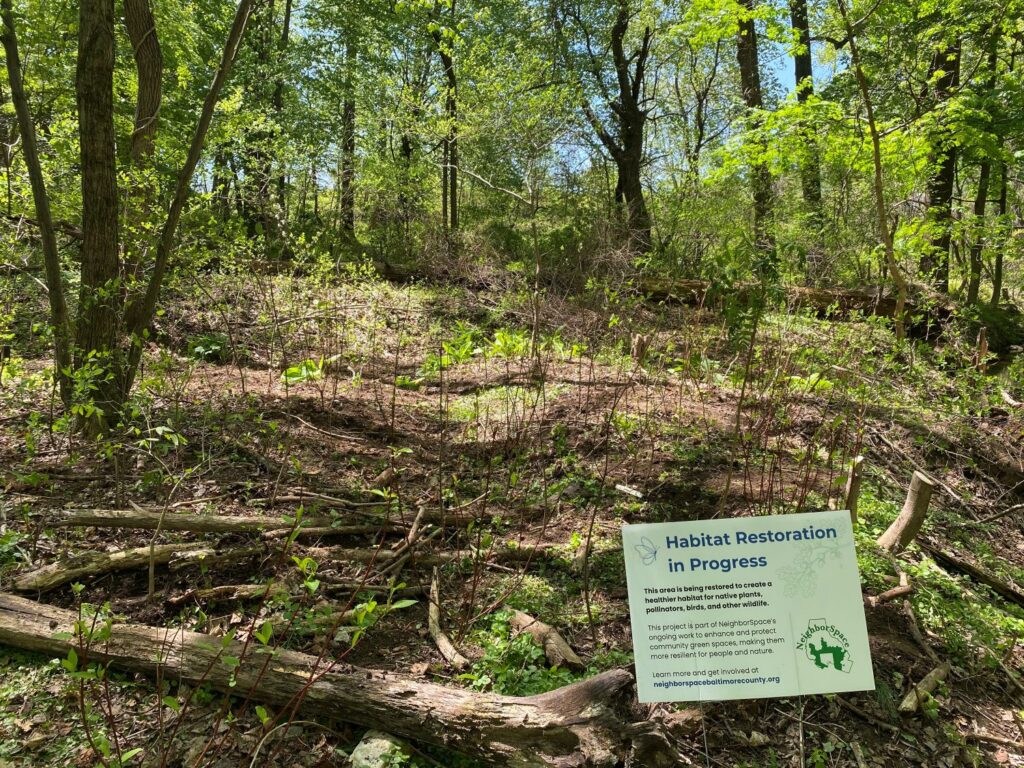
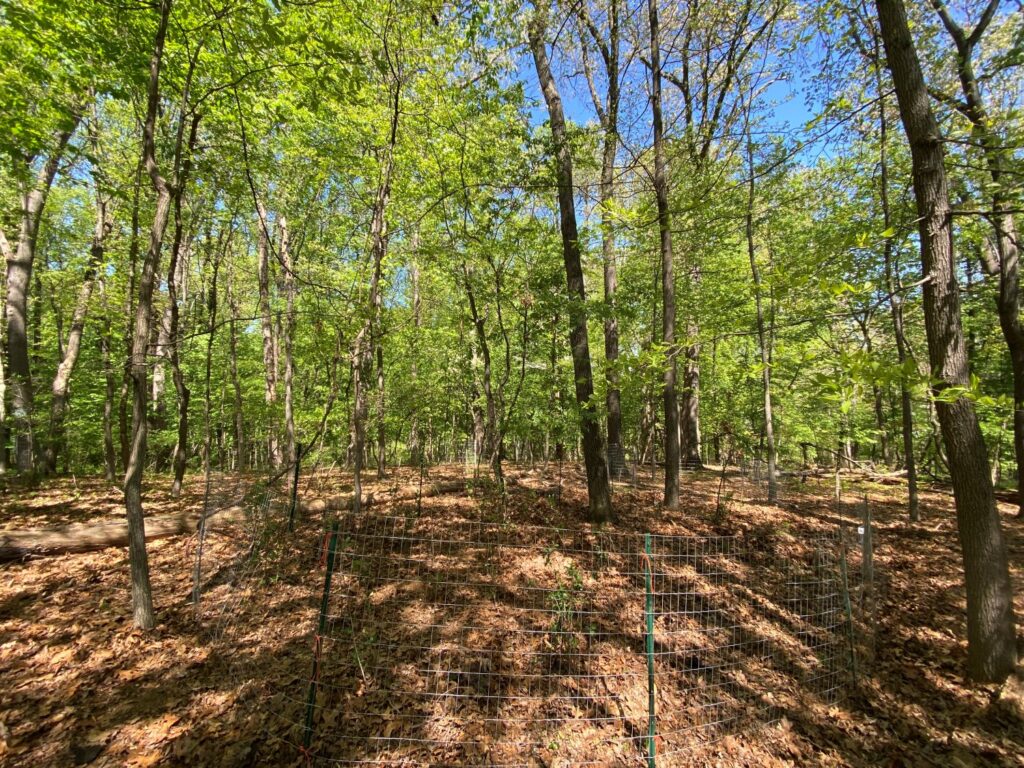
This spring, NeighborSpace installed its first microforest/Miyawaki plantings at Tollgate Wyndham Preserve in Owings Mills. With the help of some very dedicated volunteer groups from BGE and Stanley Black & Decker, we planted about 150 trees and shrubs in three contained locations of the preserve. The area covered by these microforests is relatively small, with the largest taking up no more than 1500 square feet. For context, many traditional tree and shrub plantings are dispersed over several, if not dozens of acres.
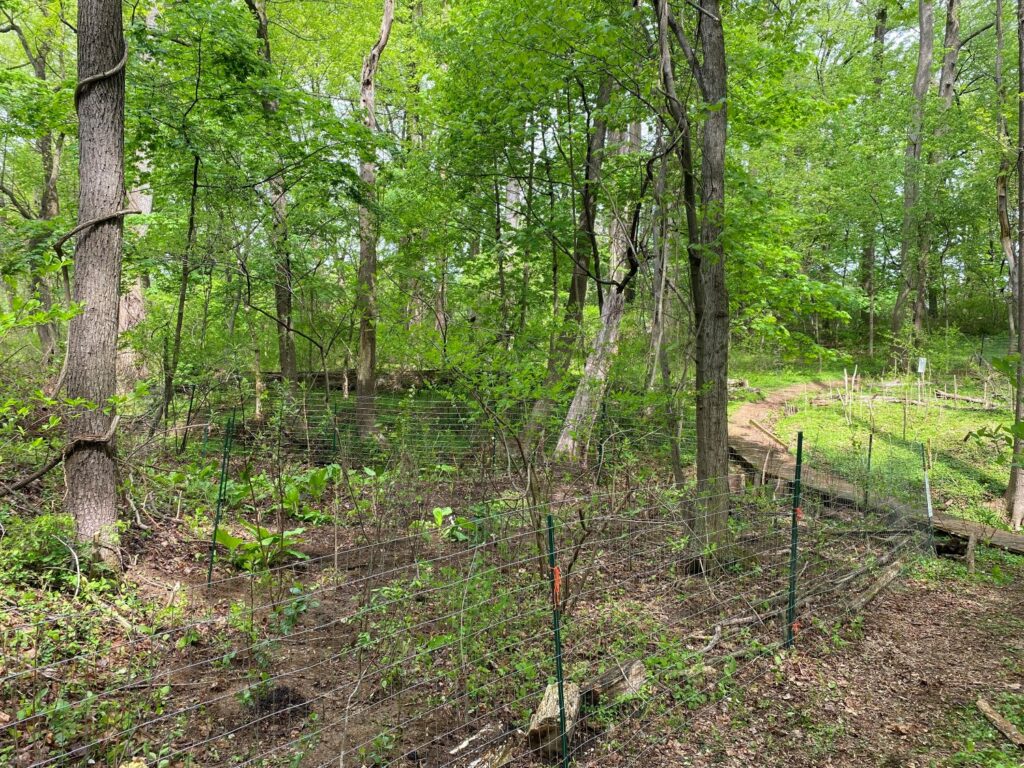
NeighborSpace decided to try out this method out after learning about the success of other microforests across the East Coast. While exploring this planting philosophy, I was pleasantly surprised by the overall survivability found in newly planted flora. First, having trees and shrubs packed tightly together increases water retention from rain events due to the proximity of so many roots. Second, deer proofing tends to be more straightforward, as the entire microforest is fenced off, rather than each individual planting. This is shown in some of the photos, where you can see the cattle wire around the perimeter of the plantings. Third, the overall density of new native flora helps suppress invasive species that may be lurking in the seedbank. Prior to our planting events, I removed several species of prolific invasives from the prospective areas in an effort to restore the health of the understory. Studies have shown that replacing invasive plant material with native plant material (whether through plugs, trees, or seeds) as soon as possible is the best way to get ahead of invasive species.
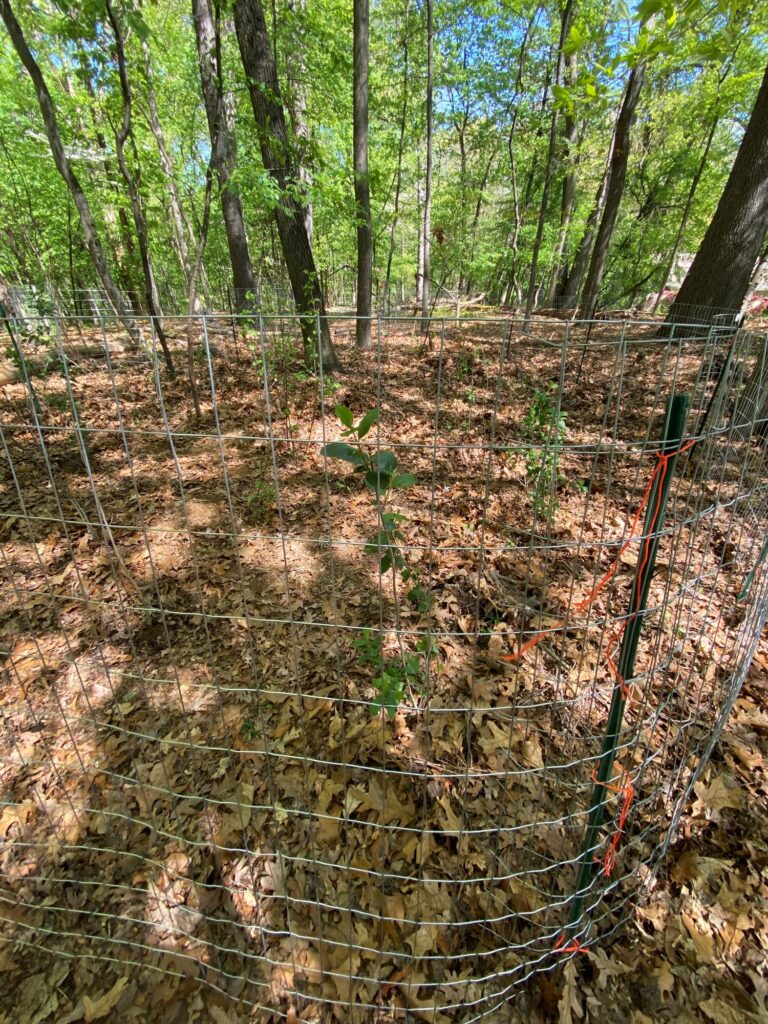
I recently stopped by Tollgate Wyndham to check on the various trees and shrubs, and I am very pleased with how everything is doing. Almost all plants are looking green and healthy, and various oak saplings have nearly doubled in size! Staff will continue to monitor the health of these microforests throughout the next several years, performing maintenance and watering as needed. As this is a trial run for microforests, we are eager to watch them develop, and just as eager to keep you all posted in the event that you would like to try growing a microforest of your own in the near future!