Earlier this month, I had the opportunity to give a virtual presentation to the Natural History Society of Maryland’s Herpetology club regarding an infectious fungal pathogen affecting amphibian populations around the world. Folks from the club gathered to listen about the origins of this pathogen (known by its scientific name of Batrachochytrium dendrobatidis), and the harmful disease it causes, known by many as amphibian chytrid. Members of NeighborSpace’s staff and board also tuned in to learn about the pathogen’s methods of spread, life cycle, and facilitation by certain resistant species of amphibian.
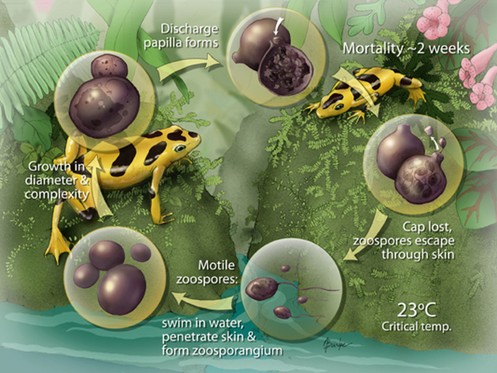
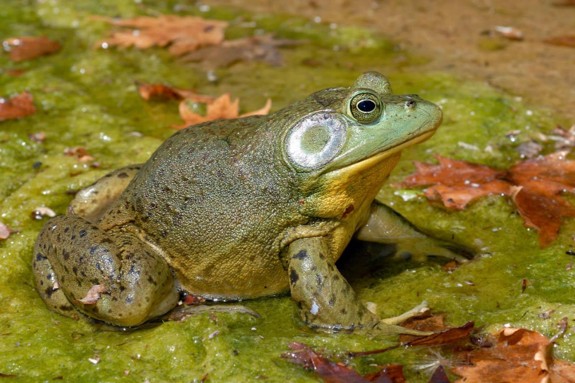
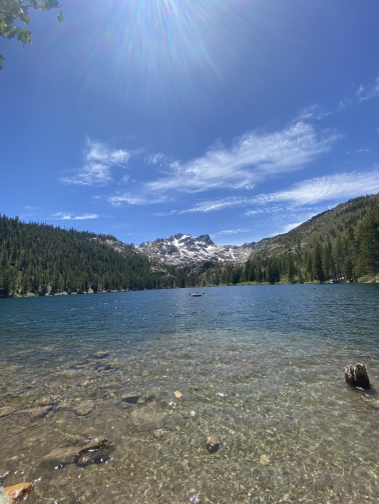
To give a very brief look at the content, the presentation covered the background, life cycle, and spread of this fungal pathogen, followed by a case study I completed for my M.S. thesis. This study examined the facilitation of the pathogen by none other than American bullfrogs* to other species of amphibians in the Sierra Nevada Mountains of California. This phenomena of American bullfrogs as a potential host vector for the fungal pathogen has been studied all over the world, looking at environments where bullfrogs have been introduced, either intentionally or unintentionally. The hardy American bullfrog can often withstand the deleterious effects of the fungal pathogen and the disease it causes, while many smaller amphibians are not so lucky.
So how does this all wrap back around to our mission here at NeighborSpace? The key is land conservation. As many of our readers already know, our fast-paced, industrious way of life threatens natural habitats in various ways, with commercial development, pollutants, waste, invasive species, and climate change putting a strain on populations of plants and animals. These variables and more reduce a population’s chances of survival, thereby making them more susceptible to novel infectious diseases. Therefore, it is paramount that we continue to focus on protecting and restoring our natural environments, in order to give plants and animals a fighting chance not only in the present, but the future as well.
NeighborSpace would like to thank Rebecca Baldwin and the NHSM Herpetology club for this presentation opportunity! If you’re interested in learning more about amphibian chytrid and the Herptofauna at NeighborSpace sites, please send an email to conor@neighborspacebaltimorecounty.org.
*It’s important to note that American bullfrogs are in fact native to the eastern United States, and therefore play an important role in our local ecosystems. Always treat them with respect when you see them! It goes to show that any plant and animal can become problematic when introduced outside of its range, including our own native species.