Have you ever walked by a tree in winter and wondered what species it might be? Without its leaves, one of the typical defining characteristics of tree identification, it can be hard! But here is a way to ID a few of our more common tree species during the cold months – by looking at the bark. While the bark of many trees can seem similar, if not exactly the same, at first glance, a closer look reveals its secrets. This article will take a look at five separate tree species in our area and attempt to separate them by bark ID alone.
The best way to start learning a tree species by bark is to identify a few trees on your property or at nearby parks that you may already know. That tall White Oak tree that shades your driveway during the spring, summer, and fall, now bereft of leaves, could be a perfect example. Look closely at the tree, now leaf-less, and see how its bark changes from the base of the trunk to the tops of the branches. White Oak bark is different from many other native oaks, as it starts off segmented at the base, where the oldest growth is, and becomes shaggier as you look up the tree, towards the new growth. This is a defining characteristic on all but the youngest White Oak trees. After examining one tree, see if you can find others nearby that share this description. You’ll be surprised at how quickly your eyes adjust to find nearly all of the White Oaks in your neighborhood or local park!


White Oak
This is just one example of winter tree identification by bark. See if you can get comfortable with finding White Oak trees around you before attempting to ID the other trees in this article.
Next up on the list is the Sycamore, a beautiful tree that is oftentimes planted as a street tree for shade. The bark of this tree is unlike any other in the area, making it perfect for winter identification. Due to this tree’s tendency of flaking off older bark to make way for new growth, the Sycamore has a patchwork look, with tan, brown, pink, and blueish blotches up the trunk and throughout the branches. The base of older Sycamore trees will often be a uniform brown, with a knobby-like appearance. As you walk along your neighborhoods, see if you can spot this wonderful tree growing along county-maintained parkways and other similar areas.

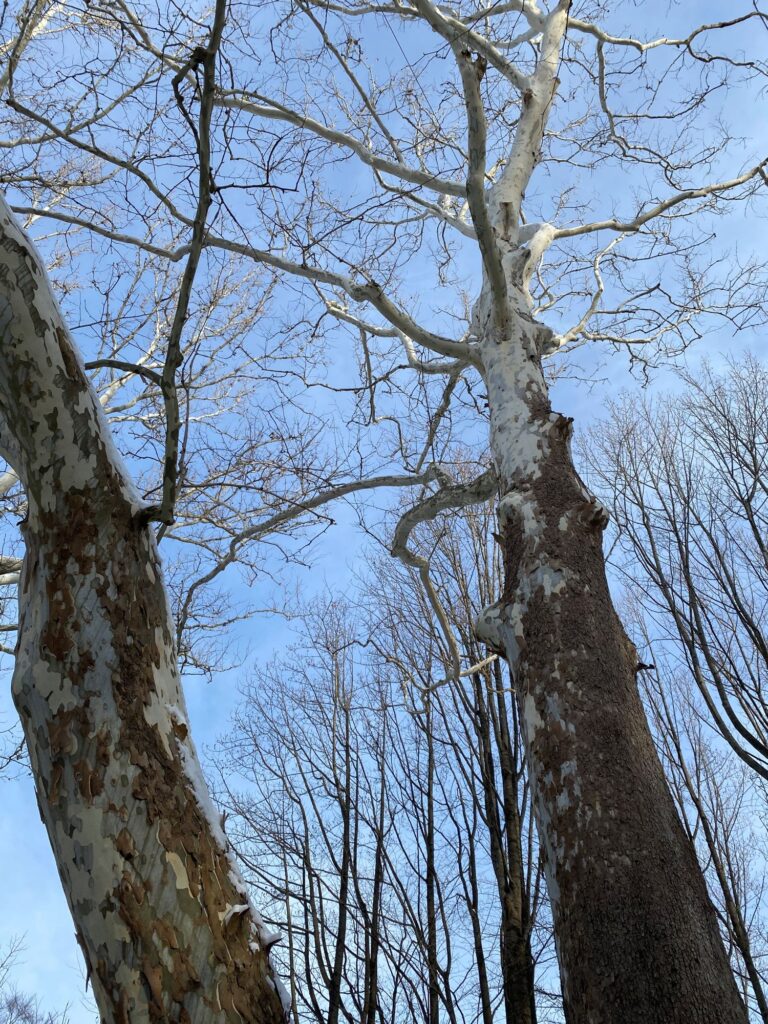
Sycamore
The third tree that we will attempt to identify is the Eastern Black Walnut tree. This is one of my personal favorites, as the bark grows in such a characteristically uniform way. With deep furrows that start from the base of the trunk and continue up the tree and throughout the branches, it can be hard to miss once you become familiar with it. Unlike trees that have bark patterns at the base that change as you look up to the branches, the bark of the Black Walnut remains the same throughout the entire tree. If you’re ever on the fence as to whether the tree you’re examining is a Black Walnut, take a break from the bark and look at the ground. If it is in fact a Black Walnut, the ground around it will be littered with its characteristic baseball-sized fruit!

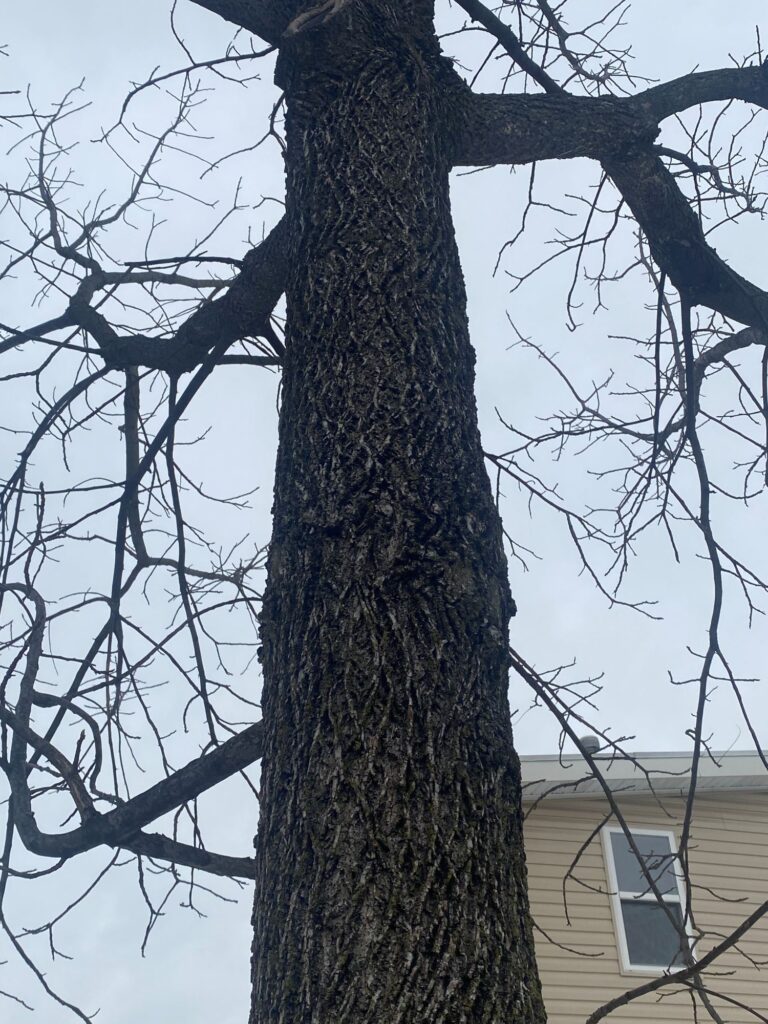
Eastern Black Walnut
The next tree we’ll examine together is the ubiquitous, gorgeous Red Maple. Red Maples are one of (if not THE) most common trees in North America. They can be found growing almost anywhere that has soil. Identification of this tree by bark is fun, as they change quite a bit as they age – though not so much that you can’t ID them! Young Red Maple trees will have an almost uniformly smooth, light-grey trunk. In older trees, this smooth, gray bark can be observed higher up the trunk and on the branches, i.e. the younger parts of the tree. The base of older Red Maples will become gnarled with age, almost irregularly so, though the smooth gray bark will always be present higher up. The older the tree, the more the trunk will have a gnarled appearance. For this tree, it’s fun to find your nearest forest or forest patch, and spot the differences between both young and old specimens.
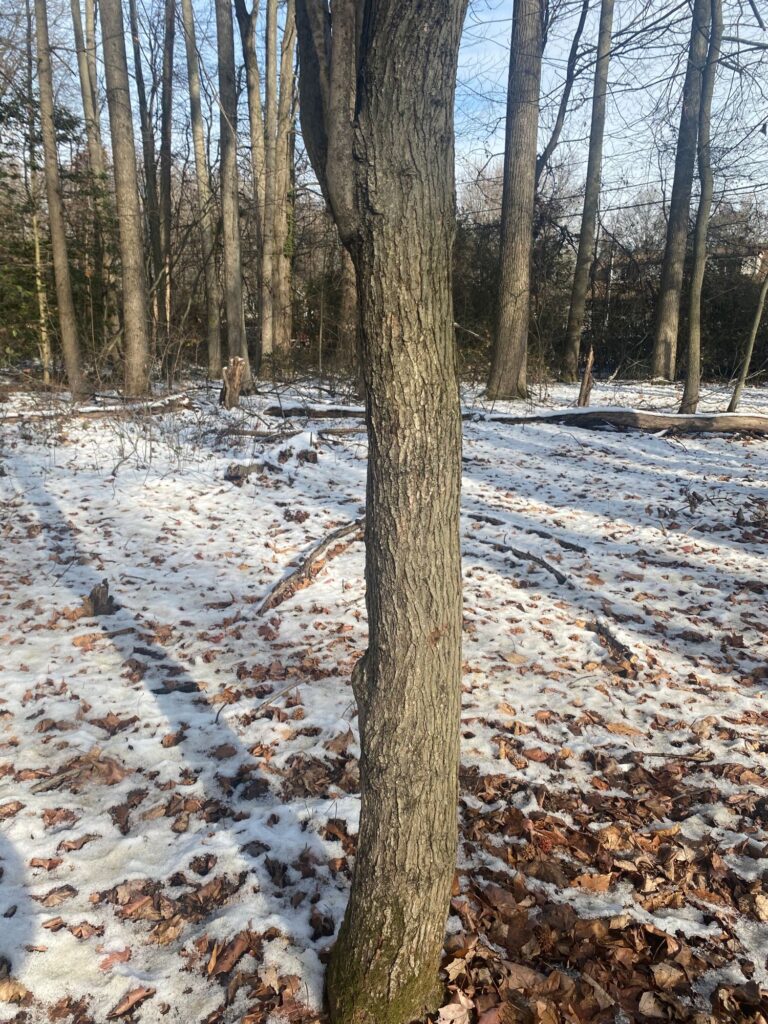
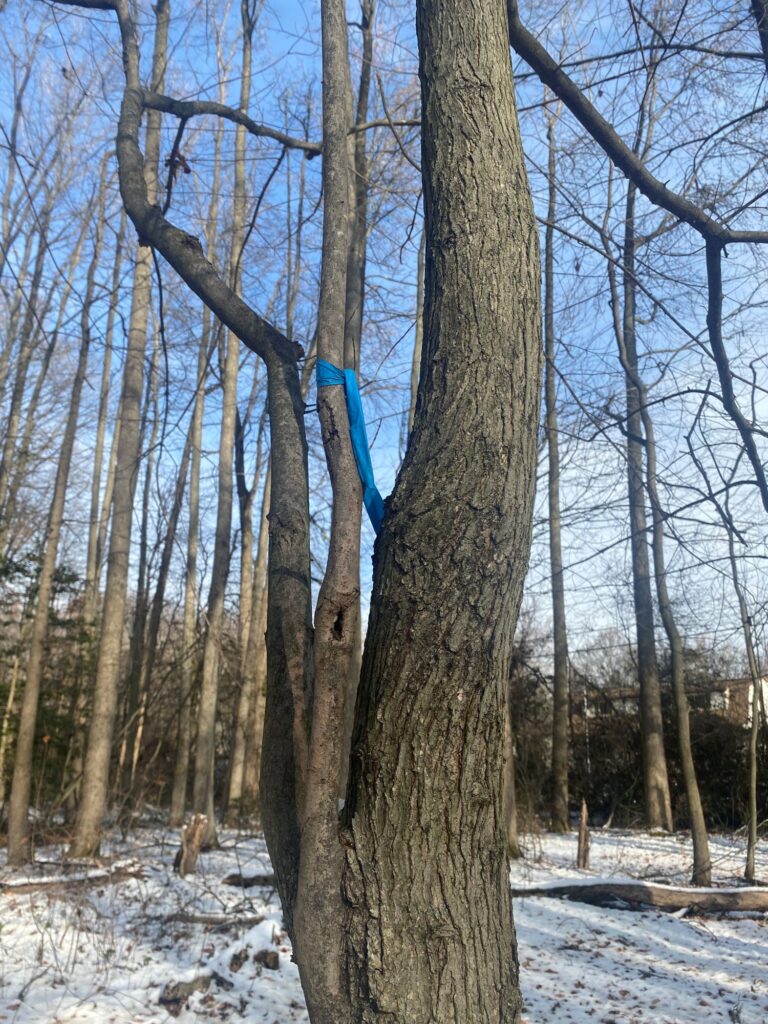
Red Maple
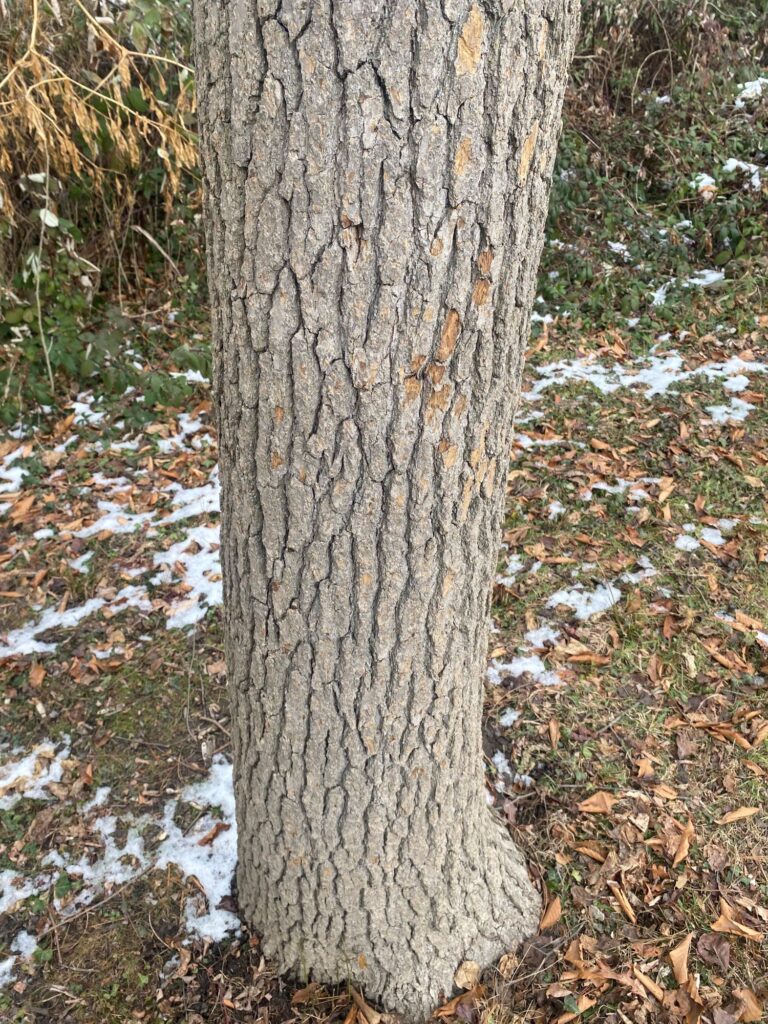
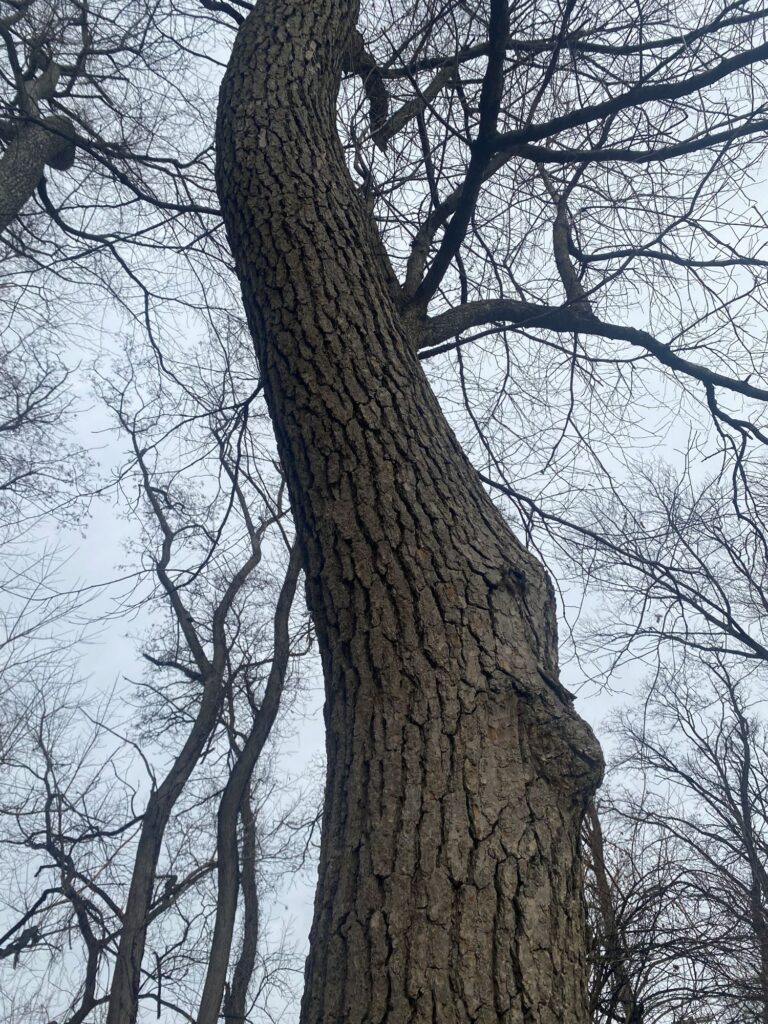
The last tree we will take a look at today is the Black Gum, also known as the Black Tupelo. They display beautiful fall foliage, oftentimes yellow and crimson leaves in the late fall. The bark of this tree is no less striking, and is often described as “crocodile” bark. As you look at the attached photos, you might see what I mean! The bark near the base of all but the youngest Black Gum trees does in fact have a segmented, crocodile-like look to it that appears very different from other trees in the forest. This one takes a little time to recognize, so don’t be discouraged if you don’t pick it up immediately.
Black Gum / Black Tupelo
Winter tree identification can certainly be tough, but with practice year after year, you will start to look at trees in a different way. There are many different guides out there on the internet that you can use to further your knowledge of tree bark ID as well. The most helpful way to get started is to examine trees that you already know. For trees that you don’t know, write your guesses down and return in the spring to check your work!
If you’d like to see more tree ID articles in the future, please reach out to info@neighborspacebaltimorecounty.org and let us know.