We’re back again this month with more trees to identify during the winter using your newfound bark ID skills! This month, we’ll be looking at four more common native trees in Maryland: Black Cherry, American Beech, Tulip Poplar, and Northern Red Oak.
As with before, start by identifying one tree in this list, and wait to move on to the others until you are comfortable with the first. That will prevent overloading your system with a bunch of new tree-related information.
First up on our list is the Black Cherry tree. This is a personal favorite, as the bark of this tree becomes more like fish scales as it matures. While a young sapling, the bark of the Black Cherry tree is similar to other cherries, displaying the trademark horizontal “bands,” i.e. lenticels, throughout the tree. The exception to this is the base of the trunk, which begins to form irregular cracks, even while the tree is young. As it grows older, these cracks will become more uniform, spanning the length of the trunk, and adopting the characteristic “fish scale” look. The youngest growth of the tree, namely the upper branches, will retain the smooth bark with horizontal bands, though you may need binoculars to see this on particularly large specimens. As you walk through your local forest, keep an eye out for several of these trees growing near each other in loose stands.
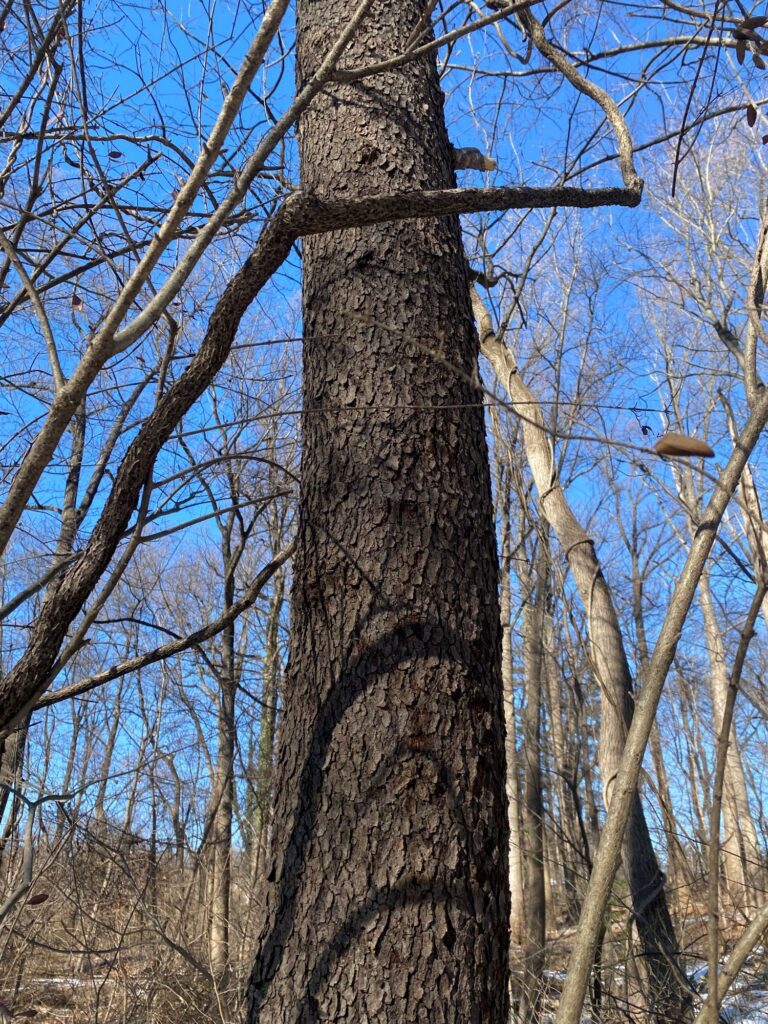
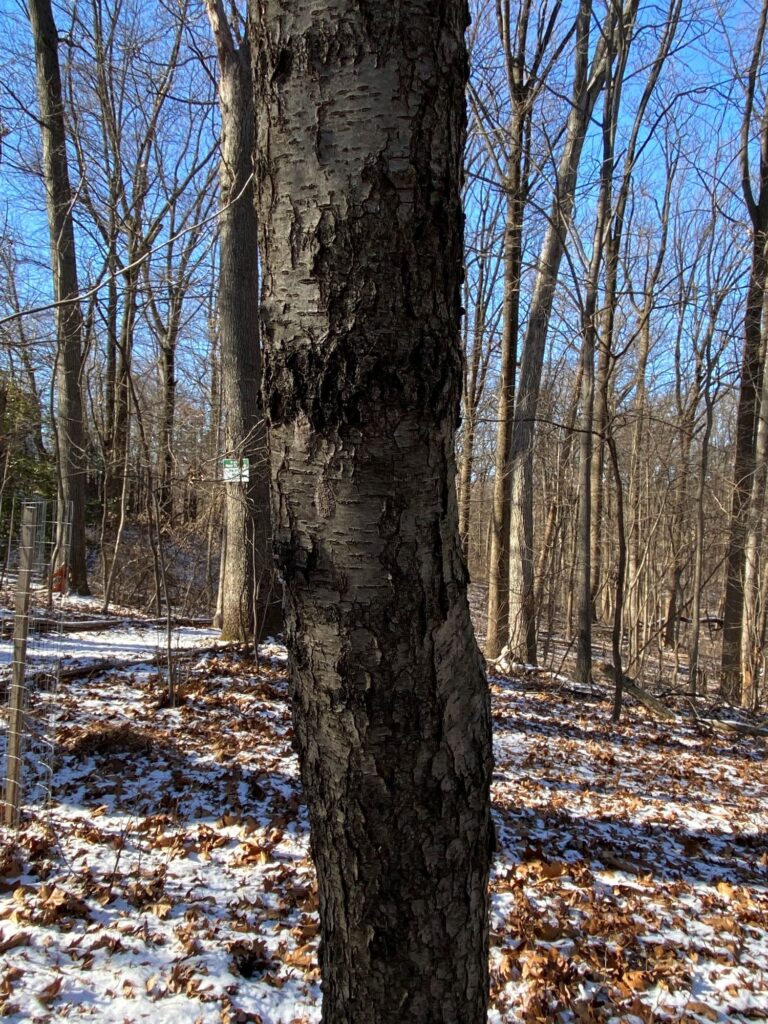
Black Cherry
Next up, we have the American Beech. This particular tree is very easy to identify during the winter, due to its habit of retaining the previous season’s leaves until the spring. When you walk into a beech forest, you’ll immediately be greeted by trees with light tan leaves all around you. While this is a pretty good metric to identify the tree, we’re here today to learn about the bark. The bark of this tree is very unique, with its smooth, silver-grey color broken up by characteristic “eye” shapes. These “eyes” are actually lenticels, which allow for gas exchange between the tree and its environment. It’s just a coincidence that they have such a definitive shape!
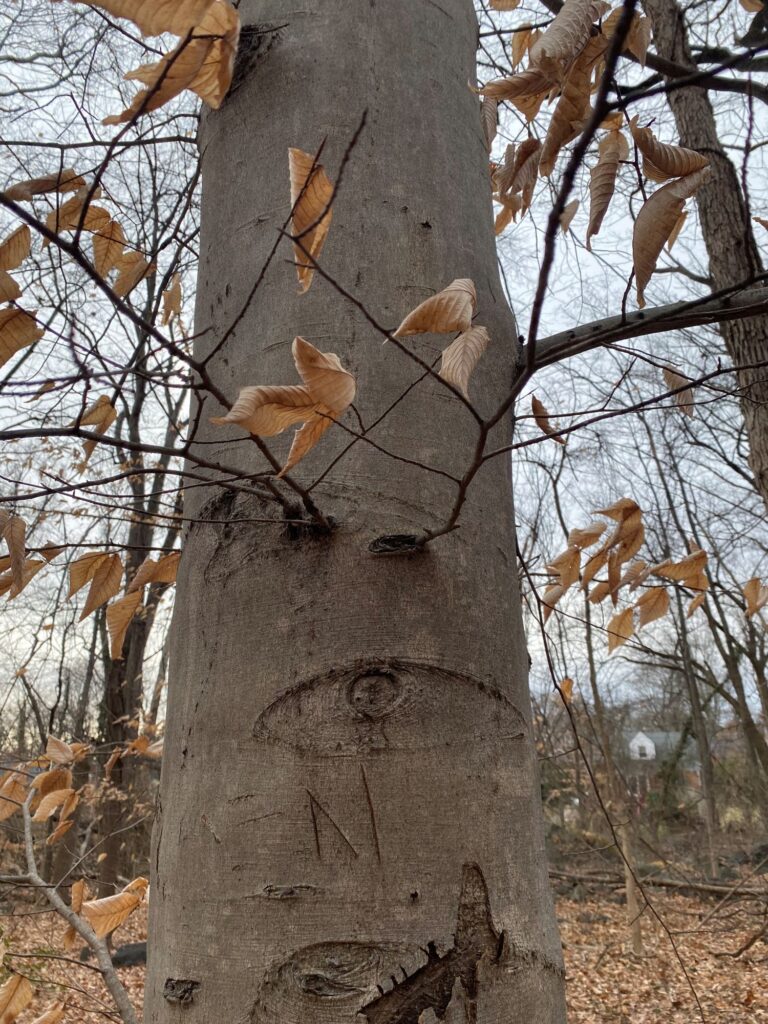
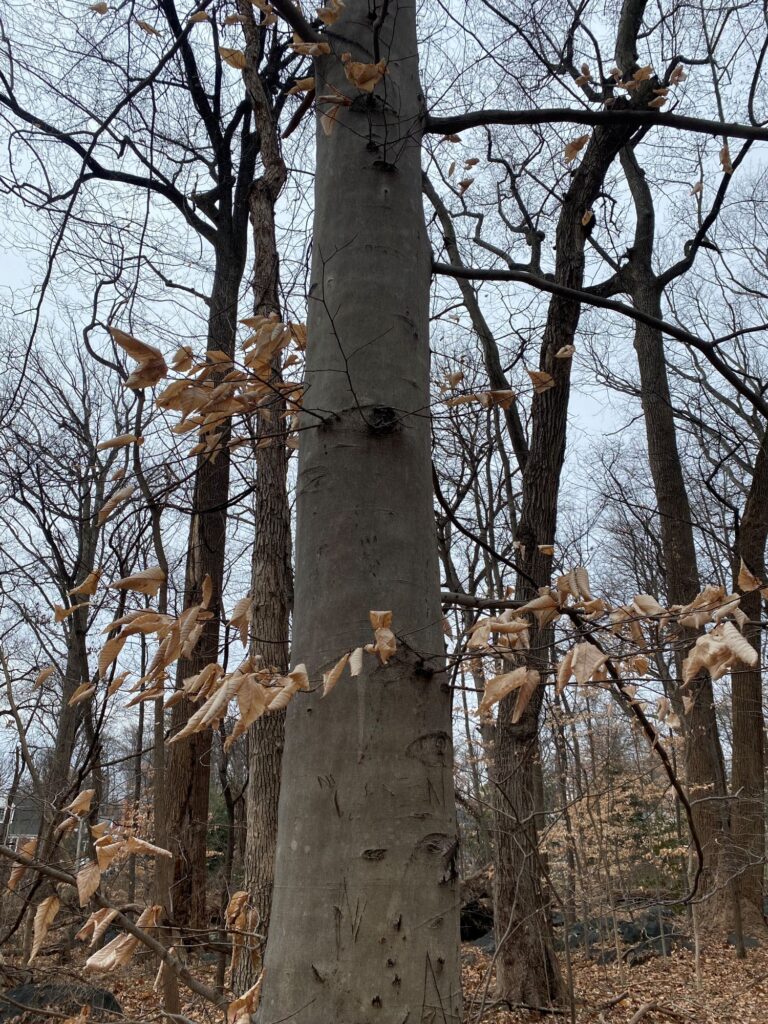
American Beech
Our third tree for the month is the Tulip Poplar, also known as the Tulip tree. This arboreal giant grows fast and lives life fast, with an average age of 80-100 years. For context, your average White Oak will live 350+ years. This makes it a common sight in early successional forests, where it will grow up and provide a canopy for the slower growing oaks and hickories. Identifying this tree by bark can be a little tricky at first, as it resembles many other types of trees at an initial glance. Upon closer inspection, we begin to find clues that help us out in our identification mission. The bark of older Tulip Poplar trees is deeply rutted, and will appear to “criss-cross” from nearly the bottom of the trunk to the tops of the branches. The very base of the trunk, however, is different, and looks very much like paper mache to me. Another way to tell that you’re looking at a Tulip Poplar is to look at the tips of the branches. Oftentimes during the winter, the Tulip trees will retain many of their dried out blossoms, and combined with your bark sleuthing skills, this is usually a dead giveaway.
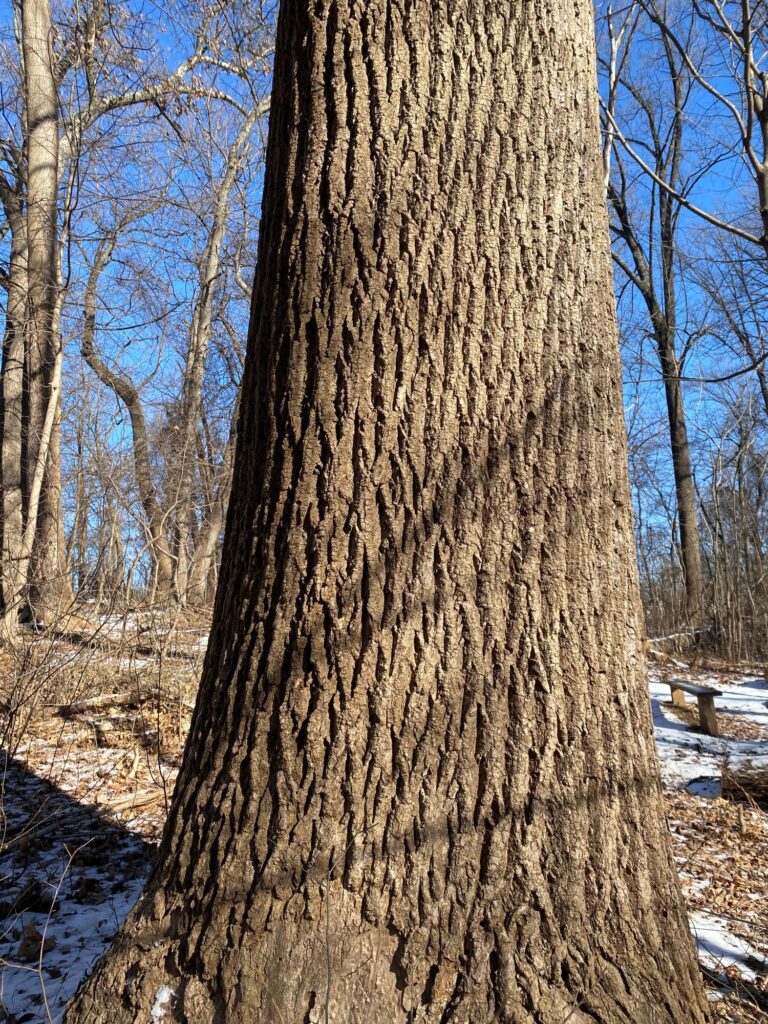
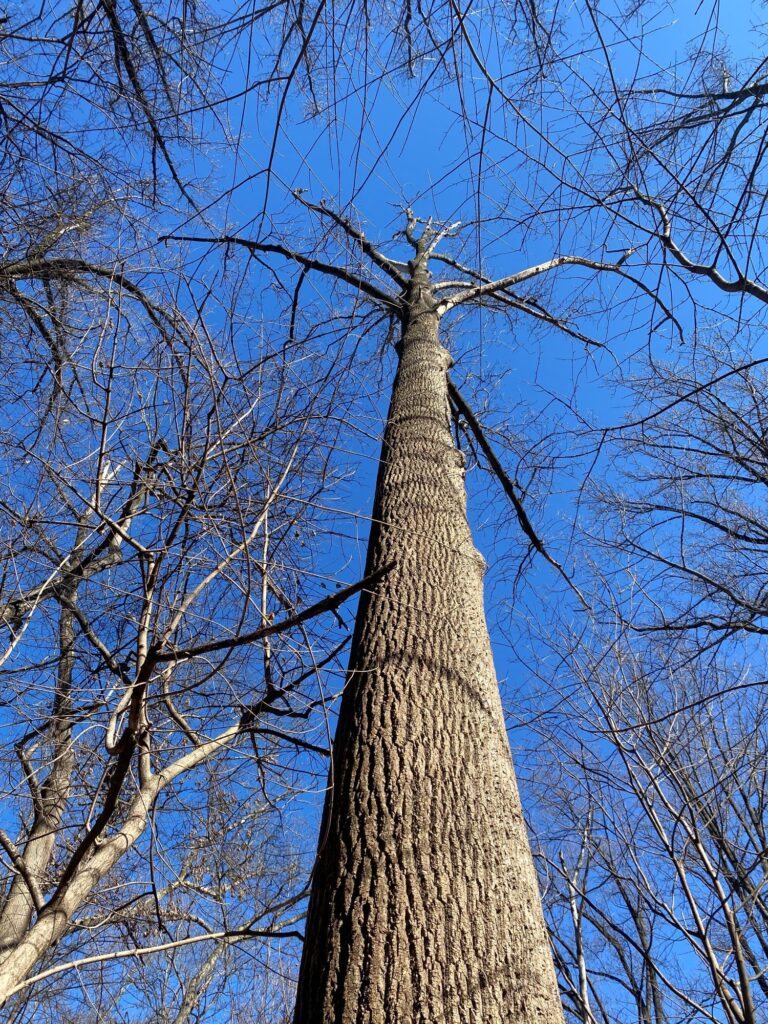
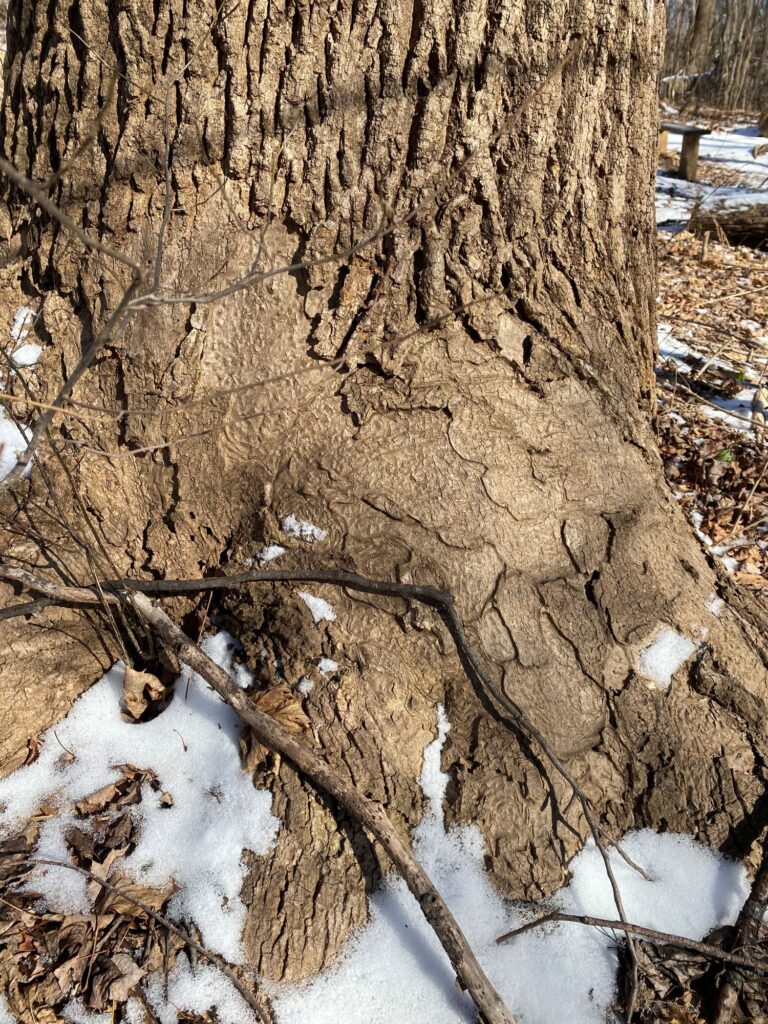
Tulip Poplar
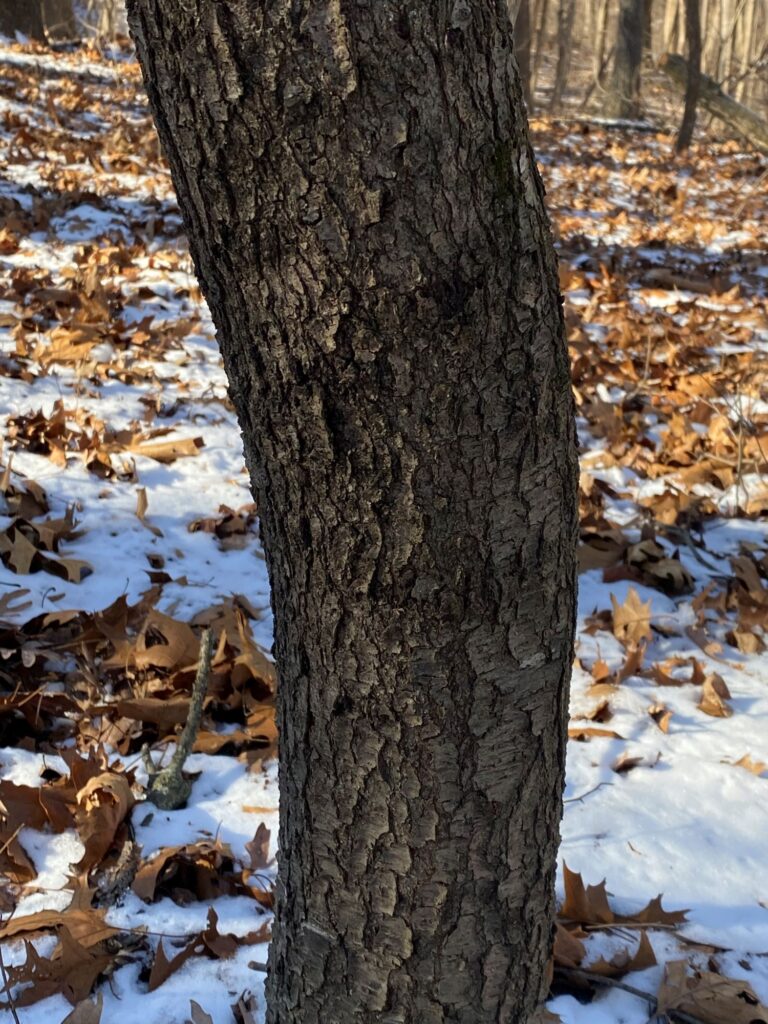
Lastly, we will cover one of our long-lived native trees, the majestic Northern Red Oak. This species is fairly common in our intact forests, and will oftentimes be found alongside its cousin, the White Oak. This is an interesting tree species to ID, as they take a bit of time to distinguish from surrounding trees, especially while saplings. The older the tree becomes, the more distinct its bark will be. The oldest parts of the bark (i.e., the portions that are most raised) are a dark grey color, while the youngest parts of the bark (i.e., the bark you see deep in the ruts and cracks) are orange-red, giving this tree its name. To confirm that you are admiring a Northern Red Oak, look for the distinctive “ski-tracks” that will form along the length of the trunk. The old dark-grey bark will usually be separated by shallow troughs of middle-age, light grey bark, which gives the appearance of a well-used ski slope.
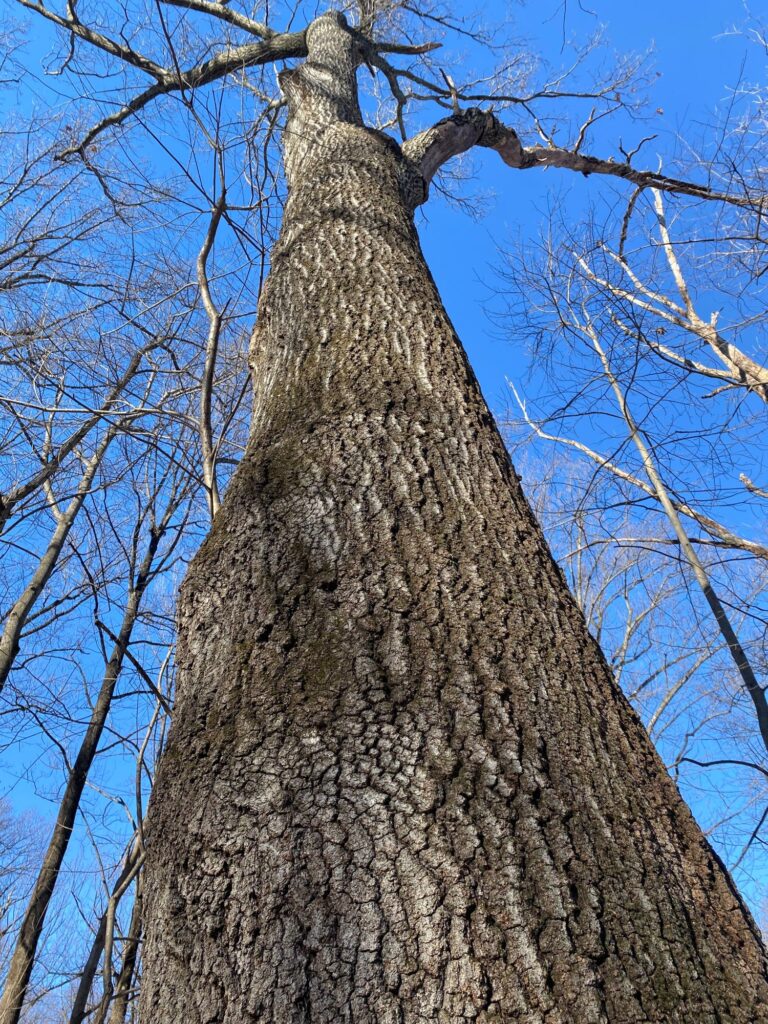
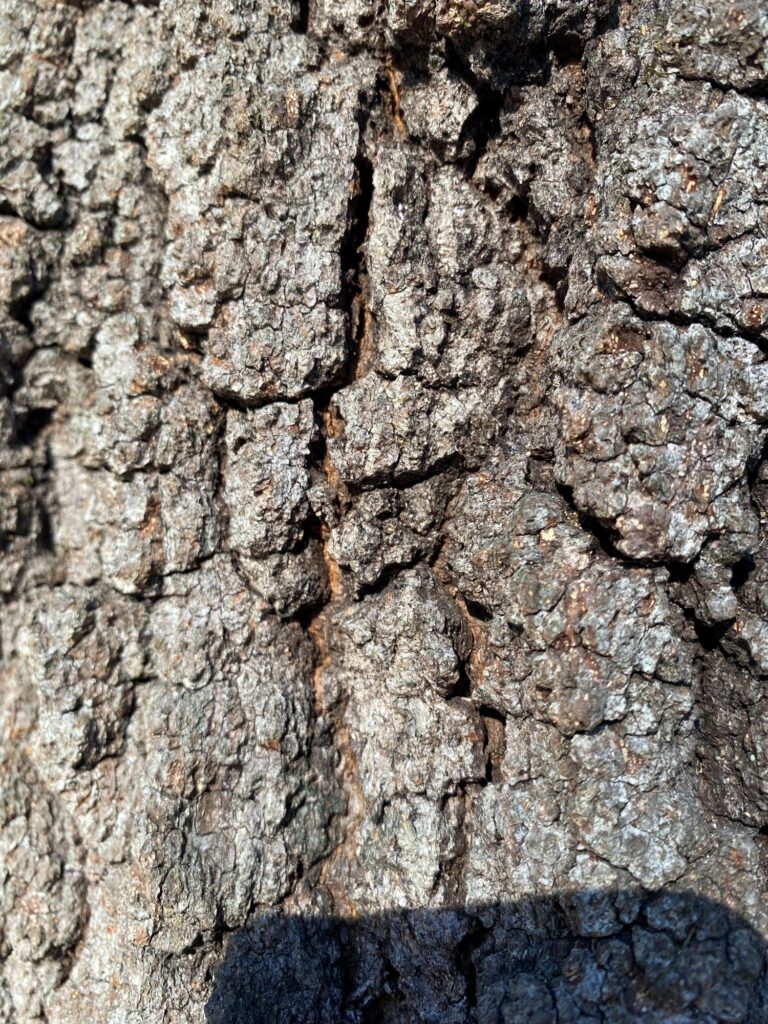
Northern Red Oak
That’s all we have for this month. Get out there and start identifying your local trees in the forests and parks surrounding your home. I would suggest beginning with the American Beech, and working up to the other trees from this article afterwards. If you have any questions or are simply enjoying this series and would like to see more, please let us know at info@neighborspacebaltimorecounty.org. We would love to hear from you. Stay warm!