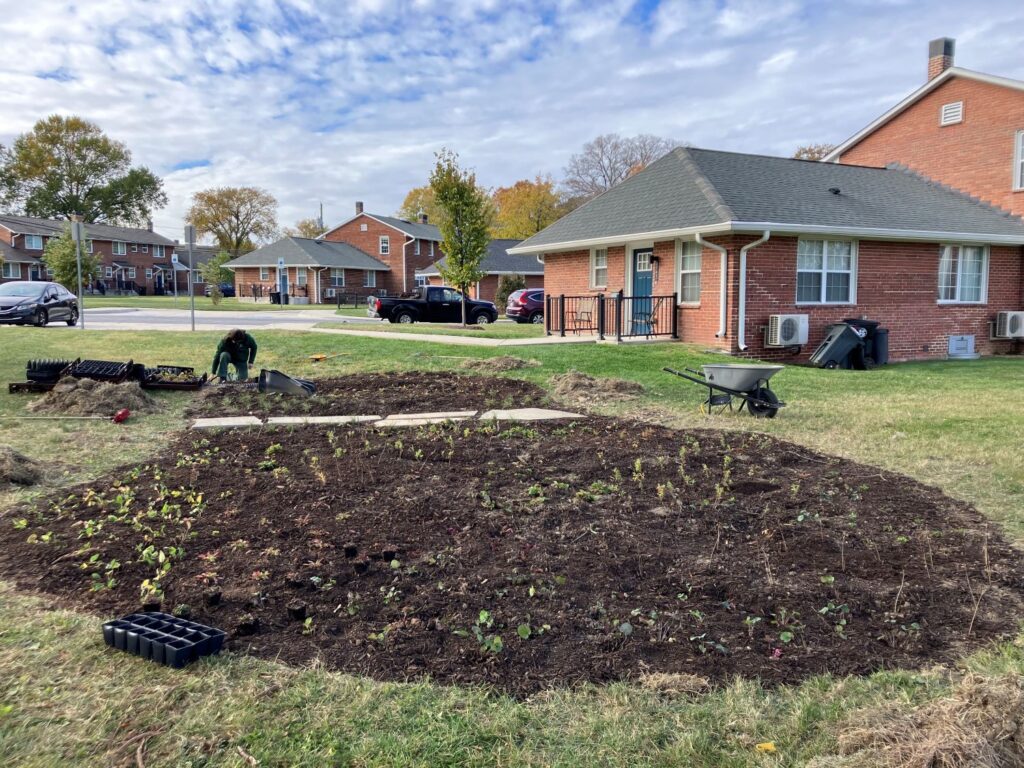
This fall, NeighborSpace installed thirteen bayscapes at residences in the Turner Station community of Dundalk, replacing more than 2,000 square feet of lawn with native plant gardens designed to absorb and filter stormwater runoff. We also distributed 10 bayscape kits for residents to install at home, 30 trees and 50 rain barrels. The implementation of these stormwater best management practices served as the final phase of NeighborSpace’s contribution to the Community Climate Resilience Project. This project was funded by a grant from the National Fish and Wildlife Foundation’s Coastal Resilience Fund and was a partnership between Baltimore County government, Turner Station Conservation Teams, NeighborSpace and others.
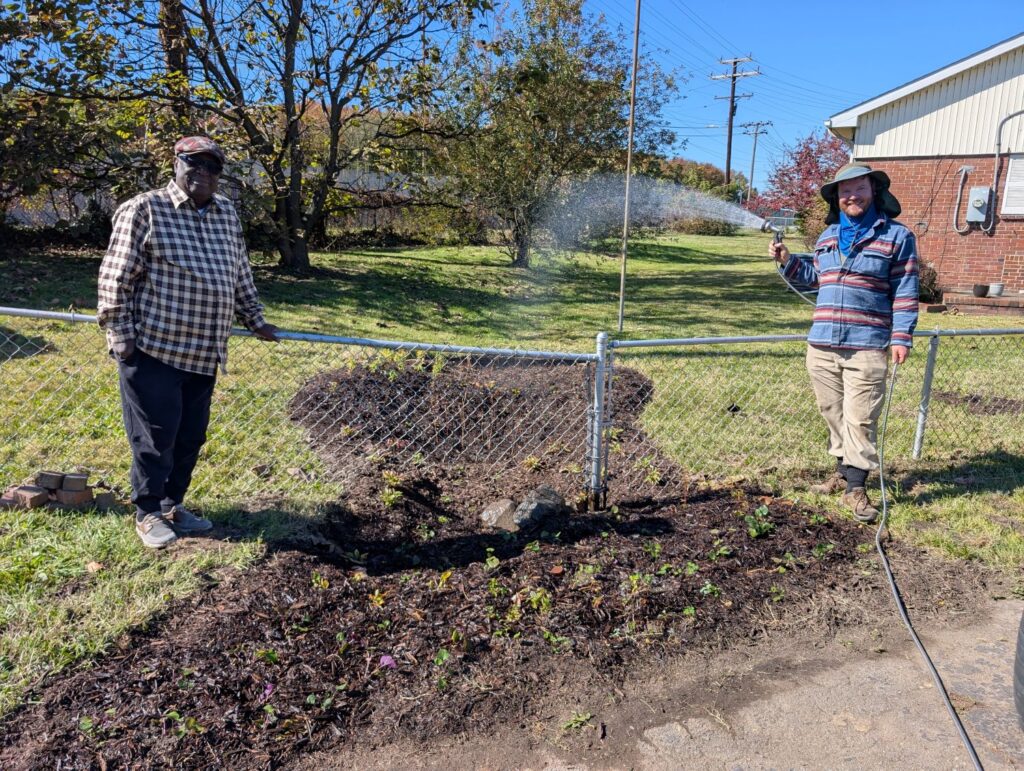
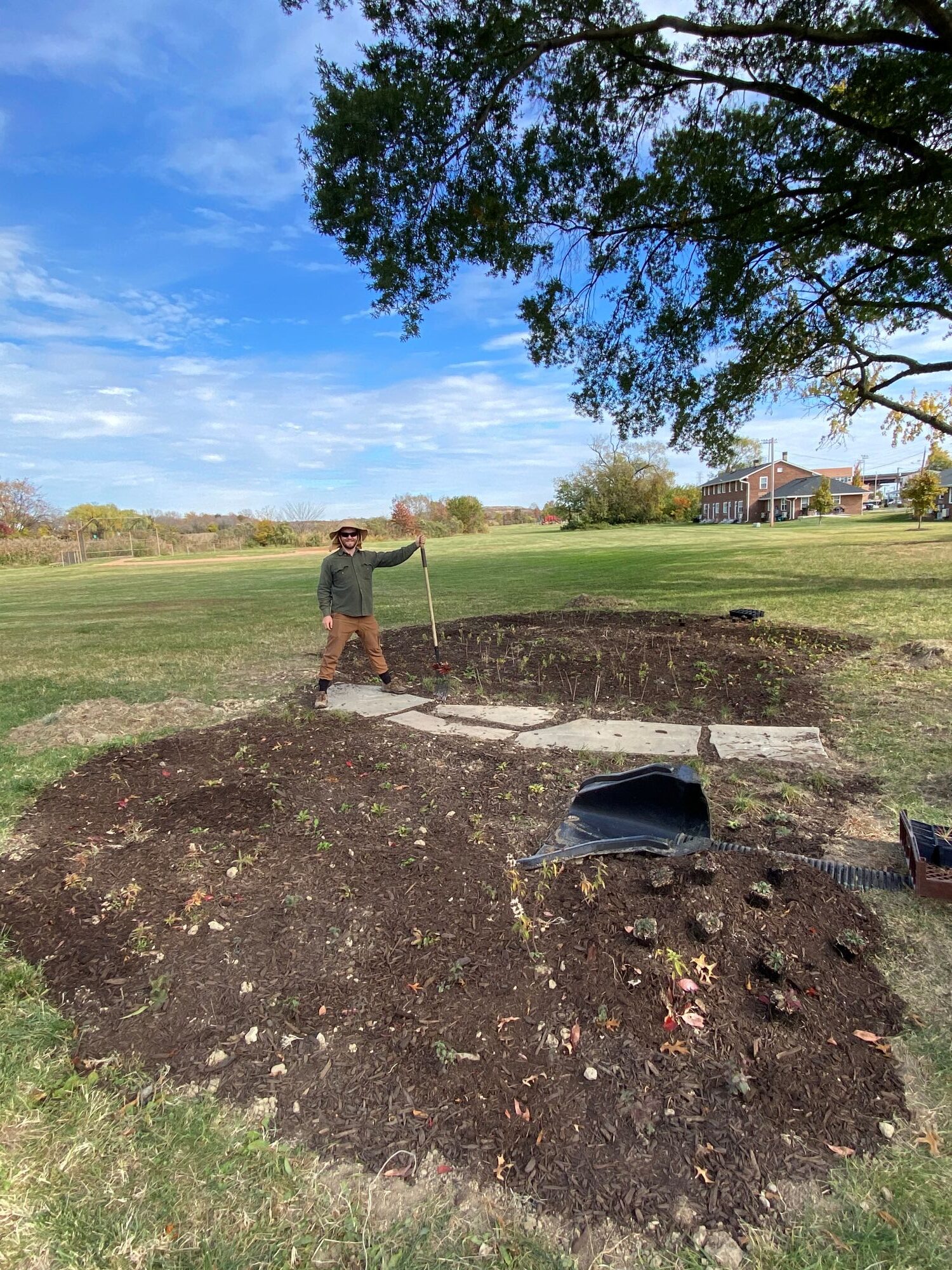
What exactly is a bayscape? This useful type of green infrastructure focuses on using plants that excel in the sandy soils of Dundalk to slow and sink rainwater. Species used include New England aster, cardinal flower, columbine, swamp goldenrod, and golden groundsel. The location of a bayscape is equally important. The Turner Station bayscapes were installed by Victor Bennett of Wildside Nursery; he walked each property and identified low areas that were known to flood during rain events. In these areas, Victor removed the sod, decompacted the soil and shaped it to channel excess water away from homes and garages. Finally, each new garden was planted densely with native vegetation that does well in moist, well-drained soils. When rainfall sheets off impervious surfaces such as roads, roofs, and driveways, it now flows into the bayscapes. Besides preventing flooding, the native plants used will also remove pollutants from rainwater while cooling the water before it reaches our streams. This in turn protects sensitive species of aquatic insects that form a vital part of our riparian ecosystems.
Shortly after installing the bayscapes, we were hit with a huge rain event. This provided the perfect opportunity to test the efficacy of our new plantings, which performed admirably! All but one of the bayscapes had slowed and sunk rainwater by the following day, with no standing water observed. The final bayscape, which had received an exceptionally large amount of runoff from a nearby road, had fully drained by the second day after the rainstorm, well within the 72-hour accepted limit.
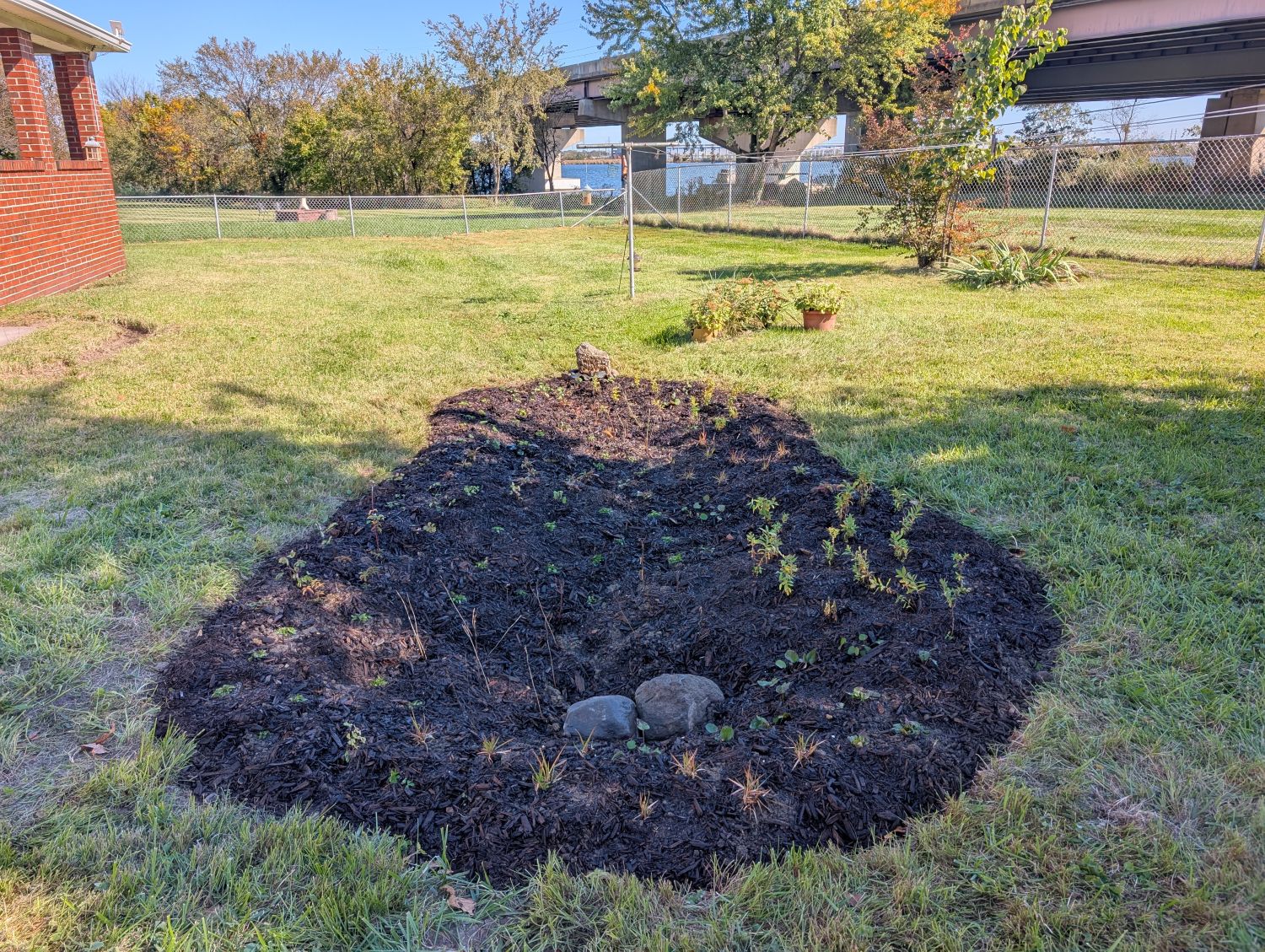
The plants used in the construction will continue to grow and put forth roots, strengthening the bayscapes in their ability to absorb water year after year. It is NeighborSpace’s hope that the success of this initial project will embolden more community members to plant bayscapes of their own, improving the neighborhood’s ability to deal with increased flooding due to climate change.