NeighborSpace is excited to share that it was awarded a grant from the Environmental Protection Agency through its Thriving Communities program. Although we received notice of our award in November, we’ve hesitated to share the news publicly due to the significant disruptions that this grant program has faced in the past year and a half. While litigation is pending, NeighborSpace has begun to implement the project and I’m eager to share more information with you.
The Thriving Communities grantmaking program was created under the Inflation Reduction Act’s Environmental and Climate Justice Program to distribute over $600 million to community-based nonprofits working to address environmental and public health hazards in underserved communities. In the Mid-Atlantic region, the grants are administered by the Green and Healthy Homes Initiative (GHHI). Both GHHI and Environmental Protection Network (EPN), a nonprofit network of EPA alumni volunteering their time and expertise, have been incredibly supportive in helping NeighborSpace navigate the complex and ever-changing requirements that come with federal funding.
NeighborSpace was awarded $129,000 to develop the framework for and pilot a proactive approach to conservation, as outlined in its new Strategic Conservation Plan (which will be published soon).
NeighborSpace conserved each of its current 21 sites in response to a request from a resident or from a County government representative. While this approach has the benefit of guaranteeing at least one park champion and a certain level of community buy-in, requests are not distributed equitably across NeighborSpace’s service area. There are many areas with a high need for green space that NeighborSpace does not yet serve; conversely, several of the sites that it currently conserves are located in areas with a relatively low need for additional open space.
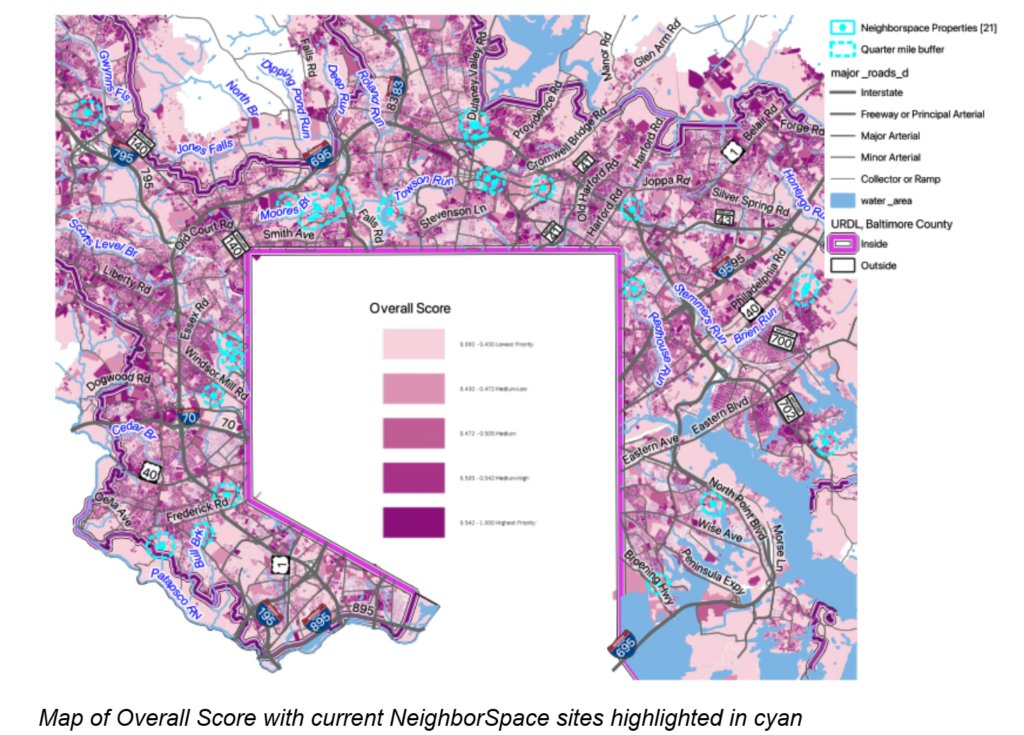
In order to achieve a more equitably distributed portfolio of sites, NeighborSpace needs to take a two-pronged approach to community conservation. On the one hand, we need to establish a set of objective project evaluation criteria and a clear, transparent process for responding to requests. On the other hand, NeighborSpace needs to make every effort to ensure that communities across its service area have the opportunity to work with us. This begins with awareness and access but will also require investments in community outreach and community capacity-building. The Thriving Communities grant is funding the development and pilot implementation of this latter “proactive” approach.
The project will be implemented in three phases and is slated to be completed by the end of this calendar year.
Phase 1: Identify target communities
The first step is to identify and prioritize communities in NeighborSpace’s service area. NeighborSpace will use its GIS tool to map communities with a high need for open space and apply its conservation priorities to further distinguish between communities according to the Strategic Conservation Plan. Before this can be done, the GIS model needs to be updated with recent data, an effort that is currently underway thanks to NeighborSpace’s GIS consultant. NeighborSpace has already met with the Baltimore County Department of Planning and the Department of Recreation and Parks to discuss this project and to solicit input on which areas to prioritize. Community Planners have generously shared their recommendations of community associations and properties to consider. We will meet with the Department of Environmental Protection and Sustainability next, to identify areas and properties that are a priority for Small Watershed Action Plans or that would help address other environmental issues.
Phase 2: Awareness campaign
NeighborSpace will prepare outreach materials and resources for communities interested in conserving green space. This will include: social media posts, emails, flyers, postcards, surveys, and resources on its website including video testimonials, information about current sites, an application form, an intake form, and a conservation guidebook. We are currently working with consultants to improve the website and develop these materials.
Once the website and outreach materials are ready, NeighborSpace will launch a campaign to raise awareness of its services and of this project with a focus on the priority communities identified in Phase 1. This will include the following activities: leverage current partnerships to connect with community representatives; post digital and print flyers; attend community meetings, events and resource fairs; and possibly mail postcards. We will work together with the Baltimore County Office of Outreach and the County Council to connect with community leaders and to learn more about their needs and capacity.
Phase 3: Engage interested community leaders in the conservation process
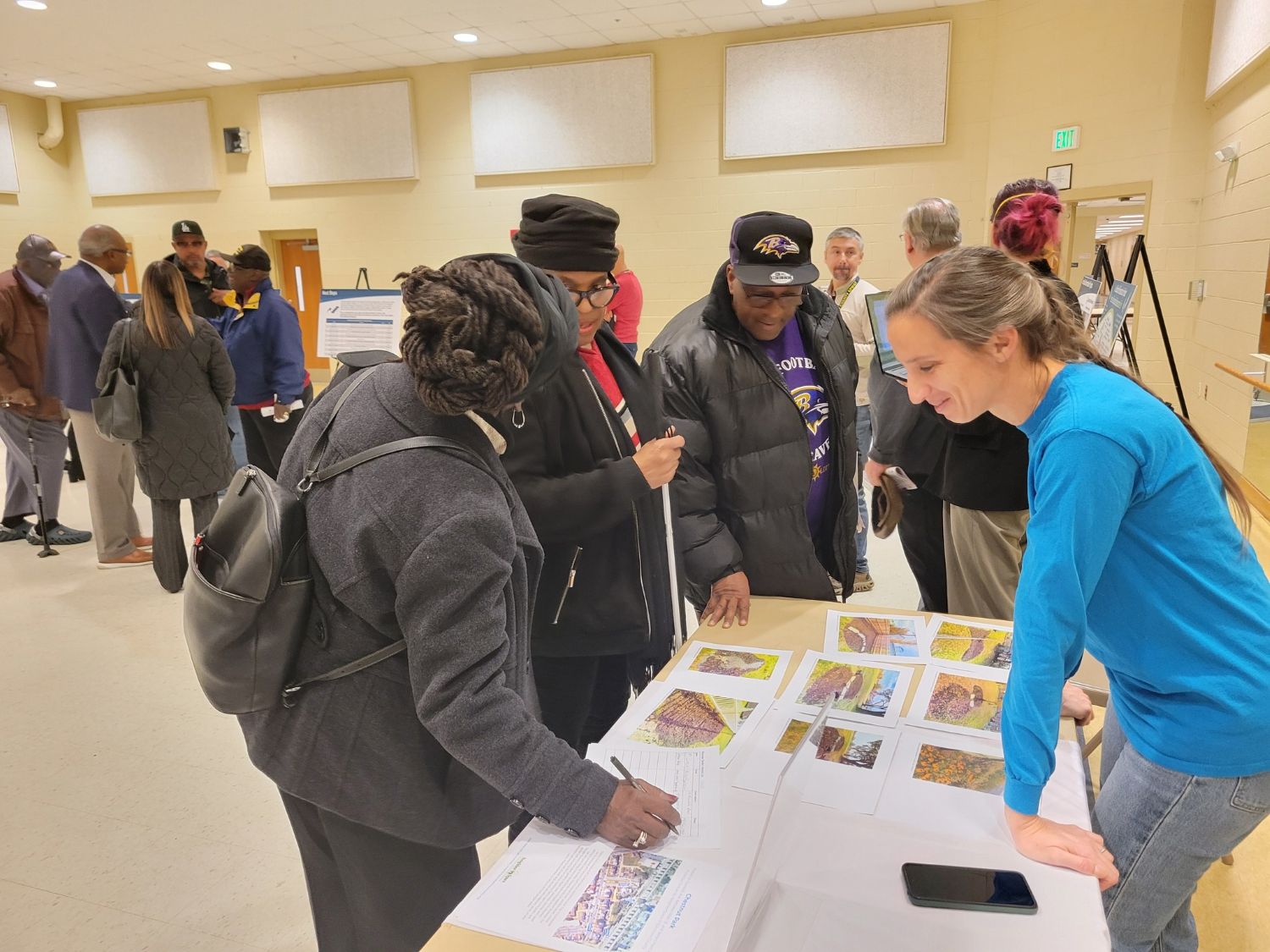
Once NeighborSpace has assembled a cohort of community leaders interested in exploring conservation in their neighborhood, we will host a series of opportunities to become familiar with the process of creating and stewarding community green space. Potential activities include: virtual meetings, a field trip to existing NeighborSpace communities and sites, and workshops on such topics as community engagement, capacity building, site design, site maintenance and programming.
NeighborSpace is ready to take this next step toward proactively providing green space and we look forward to working with new communities.