As summer starts to peek around the corner, it’s a good time to reflect on what the warmer weather has brought us and do our best to extend a season that can feel far too short. For me, it is also a time to reflect on my first couple months working with NeighborSpace! Spring was a good, if challenging, time to start at NeighborSpace. It is our busiest season, and over the last two months I have criss-crossed the county getting to know our greenspaces, the communities that steward them, and the programs we offer.
I wrapped up my second week with my first NeighborSpace event. Conor and I worked with Stewardship Partner Mike Strzelecki to lead a community bird walk at Levickas Woods in Dunmore. We arrived at the woods with muted expectations for both bird sightings and attendance on a brisk March morning, but those expectations were quickly exceeded. The Dunmore community showed up and the birds did too! A pair of American Elms mark the entrance to Levickas woods, and as people arrived we watched the trees fill up with Golden-crowned Kinglets and Brown Creepers. Elms are often the first flowers to bloom in spring. Their dainty red-brown flowers are a beacon to the residents of the forest, representing a long-awaited source of pollen and nectar after a harsh winter like the one we just had. Kinglets and Creepers are small but hardy birds who are always some of the earliest spring migrants through our area. As we made our way into the woods, the dense edge habitat gave way to a stunning riparian forest. The ghostly amber color of beech leaves still clinging to their branches dotted the mid-story as white oaks, tuliptrees, maples, and more rose around them. I was immediately delighted. Pleasant surprises like this would become a theme of my first months with NeighborSpace.
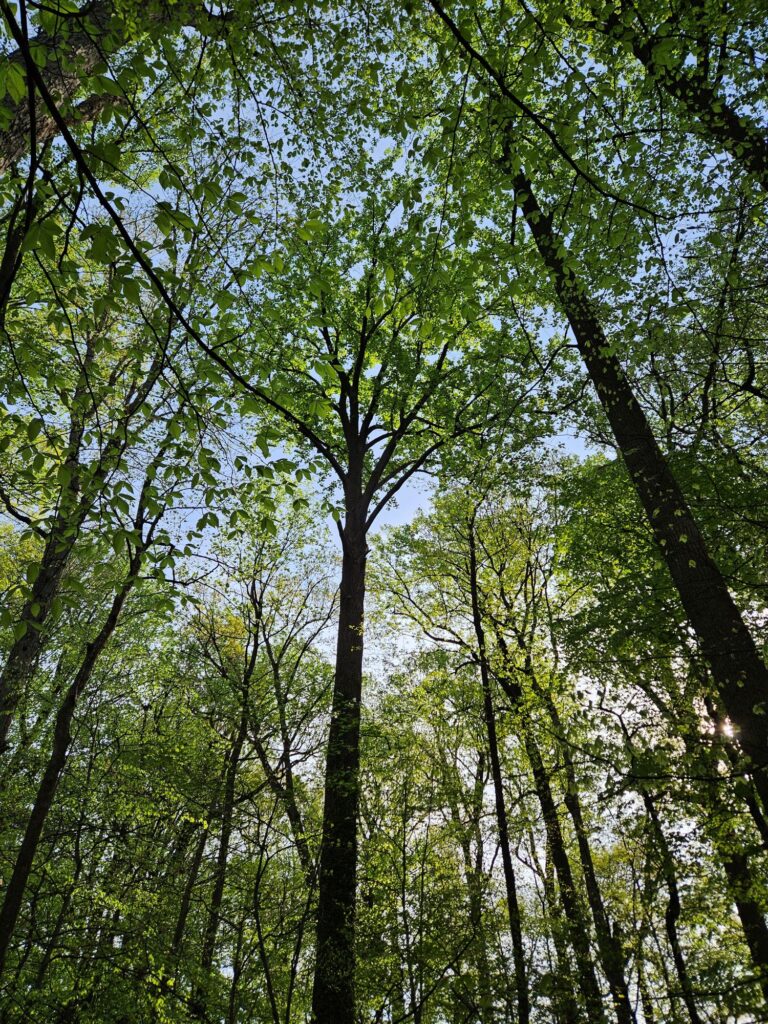
The following week, as part of my on-boarding process, Conor and I went on a nine-and-a-half hour, 90-mile road trip covering seven sites. That week I visited a total of 10 sites, meeting as many community partners as I could along the way (apologies if you’re reading this and we haven’t yet met!). This tour showed me the incredible diversity of NeighborSpace sites–from the 16-acre forest at Volz Neighborhood Park to the 1,300 square foot garden at Greenbrier–and got me thinking that NeighborSpace may be punching above its conservation weight-class. This sentiment was continually reinforced over the course of the spring.
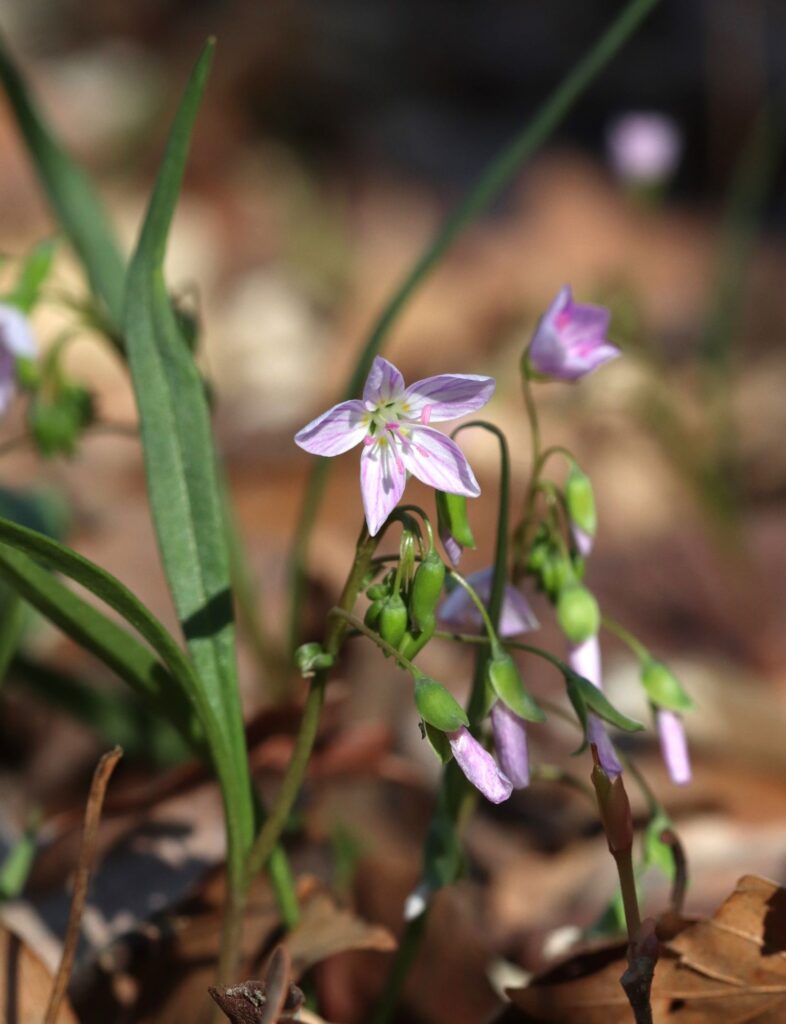
Year to year, my calendar is marked by the coming and going of birds and blooms. This spring, part of my job was documenting these shifts at NeighborSpace sites! The season started with ephemeral wildflowers. Healthy groves of Mayapples and carpets of Virginia Springbeauty could be found flourishing at multiple sites throughout April, and Yellow Trout Lilies took refuge among the boulders and fallen logs at Levickas. I also encountered salamanders, frogs and toads, and native insects. Gray Tree Frogs, Spring Peepers, and American Toads called from deep within the spicebush swamps and Red-backed Salamanders were found under rotting logs at Volz.
Starting in late-April, bird migration really picked up. Our sites supported numerous species including Eastern Towhees, Northern Flickers, Scarlet Tanagers, Baltimore Orioles, and 21 species of Warblers! Many of these colorful and charismatic birds are just passing through, but some may be sticking around for the summer to build nests and raise young. I hope to pilot a program this summer where volunteers contribute to monitoring the breeding birds at our sites. These monitoring efforts are already occurring in a small but impactful way. Combining my personal sightings with those from bioblitzes and independent eBird and iNaturalist reports, NeighborSpace sites supported a total 92 species of birds and 63 species of plants, insects, and fungi collectively from March 28th through May 17th. These numbers are impressive on their own, but given the limited sample they represent, it really speaks to the potential that our sites hold. I am hoping to expand our participatory science programming so that we can better understand and support the diversity of life at our sites.
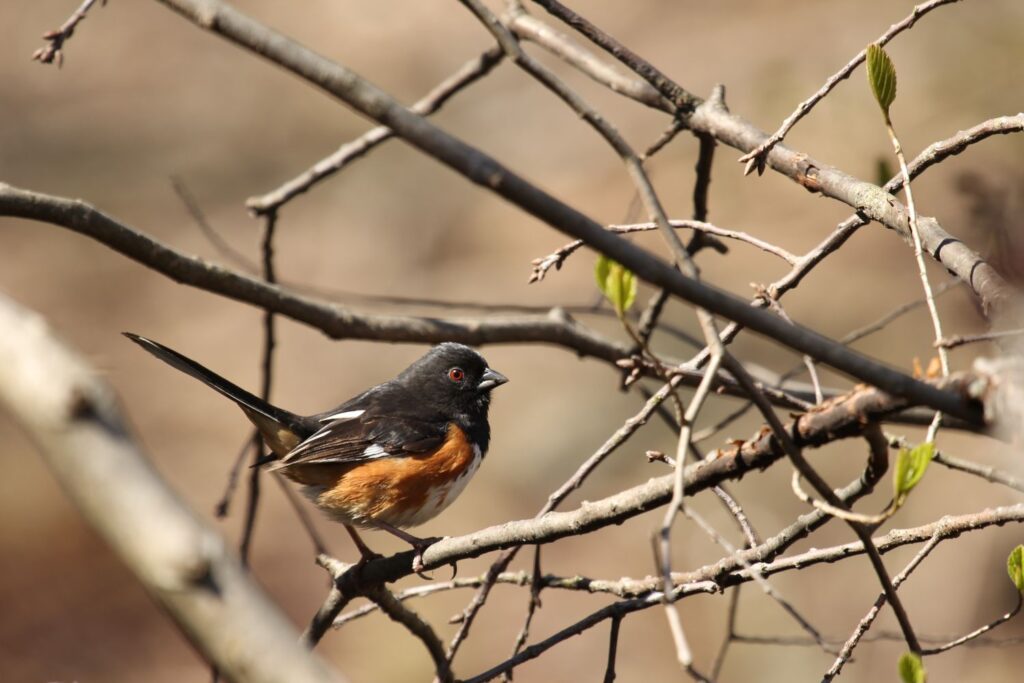
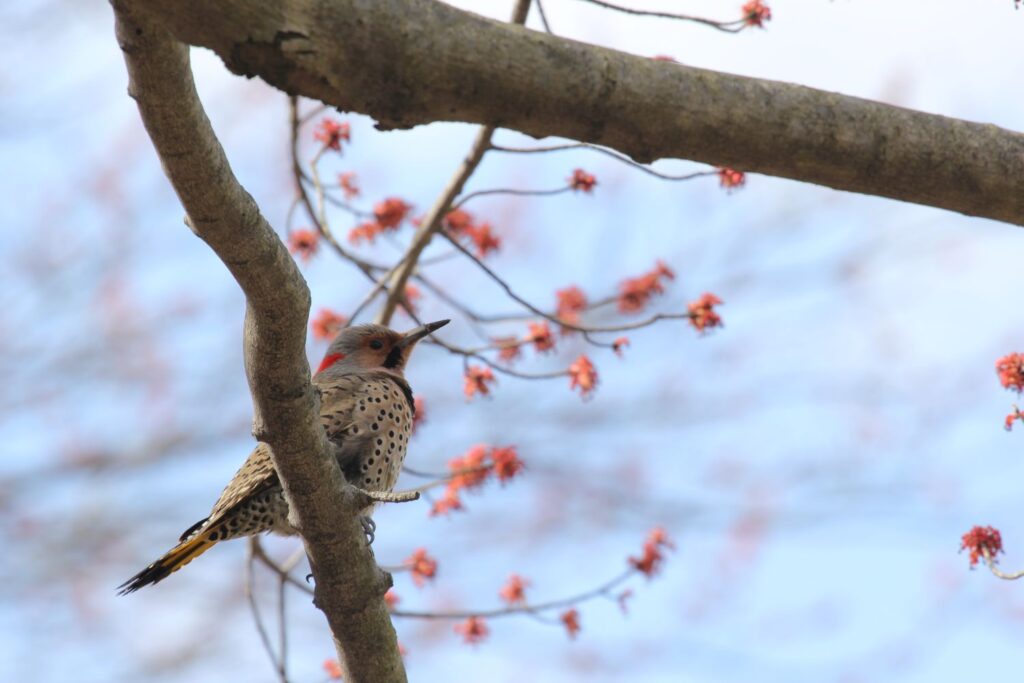
Left: A male Eastern Towhee; Right: A Northern Flicker perched in a Red Maple – Both photo credits: Will Kaselow
This article focuses primarily on the wealth of flora and fauna that our sites host, but the impression made by the incredible communities we work with across the county cannot be overstated. From a laughter-filled weeding workshop and clean-up at Graystone Community Open Space to English Ivy removal at Levickas Woods and a truly inspiring turn-out for Turner Station’s Earth Day stewardship event at Chestnut Park, I am in awe of you all and am excited to continue working with you!